








“Digital transformation” has become one of those phrases that gets used so often in UK business media that it’s started to lose meaning. Consultancies sell it as a multi-year, seven-figure initiative. Software vendors use it to justify enterprise pricing on tools that don’t fit a 30-person business. Meanwhile, the SME owner trying to figure out where to actually start is left with vague advice and no real number to plan around.
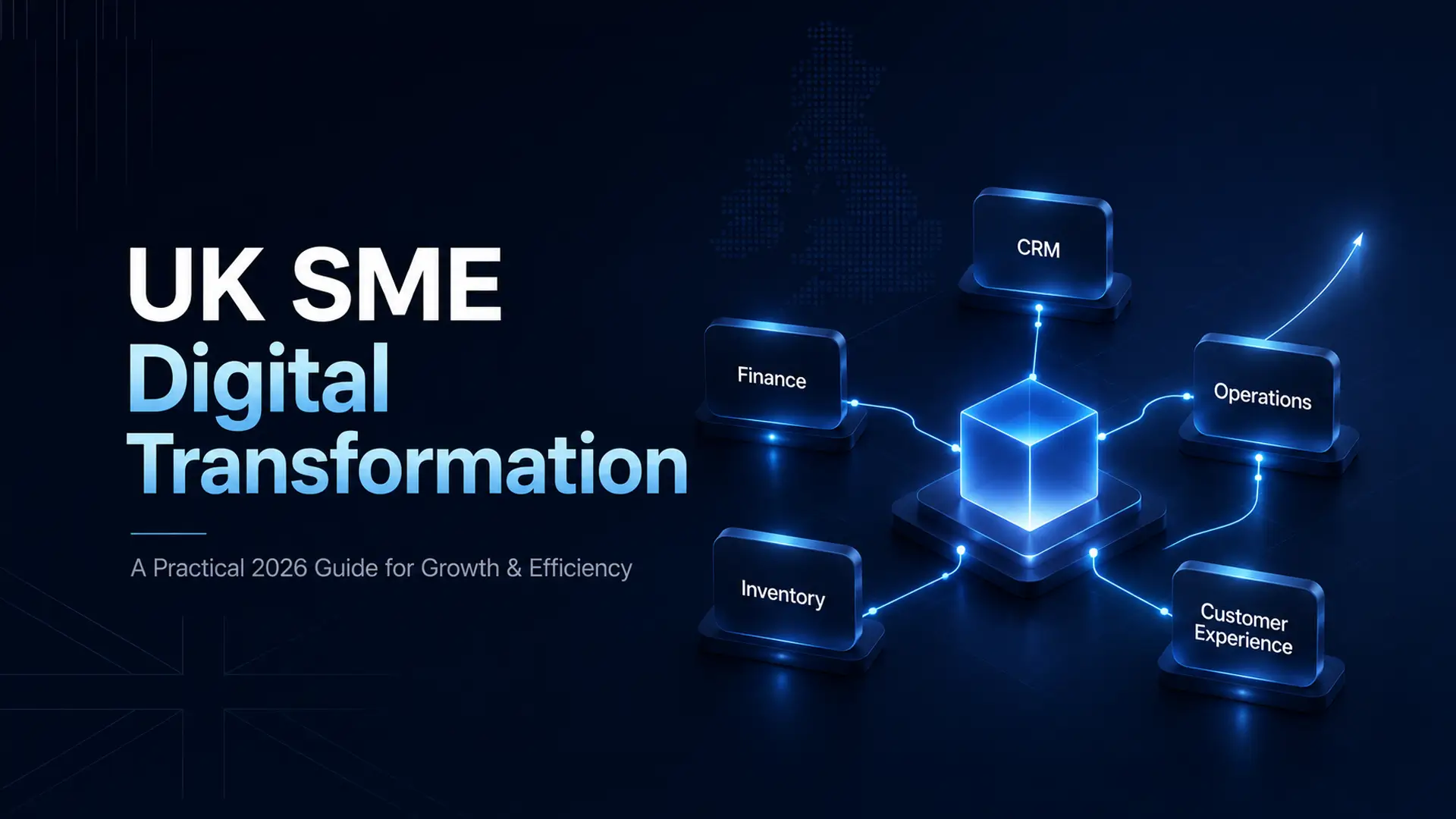
Strip away the jargon and digital transformation for a UK SME means something much more specific: replacing manual, error-prone, disconnected processes with systems that talk to each other, give you real-time visibility into your business, and free your team from repetitive administrative work.
This guide gives UK business owners and operations leads an honest starting point — what actually needs attention first, what it costs in 2026, and how to sequence the work so you see returns early rather than waiting years for a payoff.
Why This Is More Urgent for UK SMEs Right Now?
A combination of pressures has made this less of a “nice to have someday” project and more of an immediate operational necessity for many UK businesses.
- Labour costs and availability remain tight. With National Insurance changes and continued pressure on hiring costs, businesses are increasingly looking to technology to absorb growth rather than headcount. A system that removes three hours of manual data entry per day is now competing directly against a hiring decision in many SME budgets.
- Customer expectations have shifted permanently. UK consumers and B2B buyers alike now expect real-time order tracking, instant quotes, self-service account management, and fast digital communication as standard — expectations set by larger competitors and global platforms that smaller businesses are measured against regardless of size.
- HMRC’s Making Tax Digital requirements continue to expand. Making Tax Digital for Income Tax becomes mandatory in phases from April 2026 for sole traders and landlords above set income thresholds, following the same digital-first approach already in force for VAT. As MTD obligations broaden, businesses relying on manual bookkeeping or disconnected spreadsheets face growing compliance friction. Digital-first financial processes are no longer optional for an increasing number of UK businesses.
- Competitive pressure from digitally-native competitors. Newer entrants in almost every UK sector are built digital-first from day one, without the legacy processes older SMEs are carrying. That structural advantage shows up directly in customer acquisition cost and operational efficiency.
Where to Actually Start?
The single biggest mistake UK SMEs make with digital transformation is starting with the most visible problem rather than the most expensive one. A clunky website redesign feels urgent because customers see it. A broken internal stock reconciliation process feels invisible because only your team experiences the pain — but it’s often costing far more, in much the same way the disconnected systems we describe in our UK e-commerce order management case study were quietly costing one business tens of thousands a year before anyone connected the dots.
Step 1: Map where time and money are actually leaking
Before spending a pound on new software, spend a week properly understanding where your current processes break down. Where does data get re-entered manually into a second system? Where do staff spend time on tasks a computer could do reliably? Where do errors most commonly occur, and what do they cost when they happen?
This audit, done properly, almost always reveals that the most expensive inefficiency isn’t the one that was top of mind before you looked.
Step 2: Fix the data foundation before adding new tools
Many SMEs jump straight to buying new software while their underlying data — customer records, product information, financial categorisation — is inconsistent and unreliable. New software built on top of bad data produces bad results faster. Cleaning and standardising your core data is unglamorous, but it’s the step that makes everything after it actually work.
Step 3: Prioritise the highest-friction, highest-frequency process
Once you know where the pain actually is, tackle the process that’s both painful and frequent first — not the one that’s painful but rare. A process that happens fifty times a day with friction is worth more to fix than one that happens once a month, even if the once-a-month process feels more dramatic when it goes wrong.
Step 4: Choose systems that integrate, not systems that isolate
Every new tool should be evaluated partly on how well it connects to what you already have. A brilliant standalone tool that creates a new data silo solves one problem while creating another. API-first systems that integrate with your accounting, e-commerce, and communication tools compound in value; isolated tools don’t. We cover this same logic in more depth, including when it tips toward building rather than buying, in our guide to custom software vs. SaaS.
What It Actually Costs in 2026?
Honest, current ranges for UK SMEs — these vary by sector and complexity but give a realistic planning baseline.
- Process audit and digital strategy: £2,000–£6,000 for a proper assessment of current processes and a prioritised roadmap, typically delivered over 2–4 weeks.
- Core SaaS stack (accounting, CRM, communication): £150–£800 per month depending on team size and the specific tools chosen — generally the lowest-cost, fastest-to-deploy layer of transformation.
- Custom integration work (connecting existing tools that don’t talk to each other): £3,000–£15,000 depending on the number of systems and complexity of the data flows involved.
- Custom software for a specific operational gap (a customer portal, an internal operations tool, a booking system): £10,000–£60,000 depending on scope, typically delivered in phases so value is realised before the full build is complete.
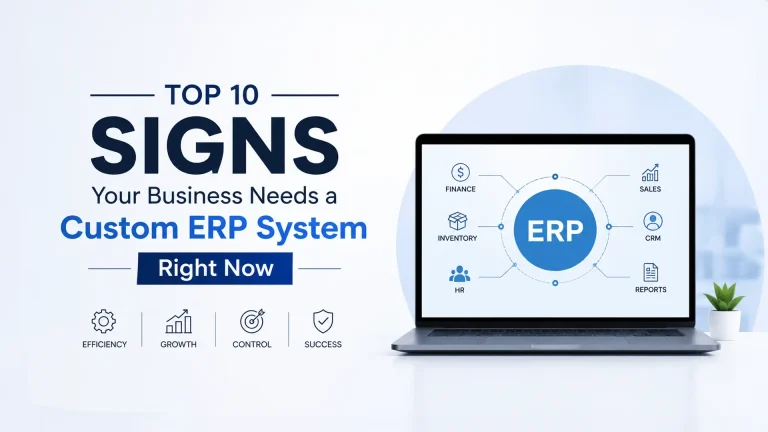
- Full custom platform or ERP-level system: £40,000–£150,000+ for businesses with complex, distinctive operational processes that off-the-shelf tools can’t accommodate well — see our breakdown of the signs your business has reached that point.
Most SMEs significantly overestimate what meaningful transformation costs because they’re picturing the enterprise-scale projects discussed in business media. A focused, well-sequenced transformation addressing your highest-friction processes is achievable well within a typical SME’s annual operating budget.
A Realistic 12-Month Sequence
- Months 1–2: Process audit, data cleanup, and quick wins — fixing the smallest, fastest fixes identified during the audit, which builds momentum and internal buy-in.
- Months 3–5: Address the single highest-friction process identified in the audit, whether that’s a custom integration, a new core system, or a significant workflow redesign.
- Months 6–9: Extend successful changes to adjacent processes, and address the second-highest priority area identified in the original audit.
- Months 10–12: Review what’s working, what isn’t, and what the next year’s priorities should be based on real operating data rather than initial assumptions.
Frequently Asked Questions
1. Do I need a full ERP system, or can I get by with connected SaaS tools?
Most SMEs under 30–40 employees can run effectively on a well-integrated SaaS stack without needing a full custom ERP. The ERP conversation typically becomes relevant when your processes are genuinely distinctive, when you’re running multiple disconnected tools that don’t integrate well, or when off-the-shelf software requires significant workarounds for your specific operations.
2. How do I justify the cost to stakeholders or co-owners?
Frame the investment against the cost of the current inefficiency, not in isolation. If a process audit reveals that a manual workflow costs 15 hours of staff time weekly, that’s a quantifiable annual cost you can compare directly against the one-time or ongoing cost of fixing it. Most digital transformation projects that target genuine friction points pay for themselves within 12–18 months.
3. What’s the biggest risk in a digital transformation project?
Scope creep and trying to fix everything at once. SMEs that attempt a comprehensive overhaul across every department simultaneously tend to run over budget, disrupt operations, and lose momentum partway through. Sequencing the work around your highest-impact priorities, with clear phases and visible wins along the way, is the single biggest factor separating successful transformations from stalled ones.
4. Should we hire an in-house developer or work with an external partner?
For most SMEs, an external development partner is more cost-effective than a full-time in-house hire, particularly for the build phase of a transformation project. An in-house hire makes more sense once you have an ongoing pipeline of development work that justifies a permanent technical role. Many businesses use an external partner for the initial build and either retain them for maintenance or bring development in-house once the system is established. If you go this route, our guide to vetting an offshore development partner covers how to do that without getting burned.
Start With Clarity, Not a Big Bet
Digital transformation doesn’t need to mean a multi-year initiative with an unclear return. For most UK SMEs, the right approach is a focused audit, a prioritised plan built around where the real friction is, and a phased build that delivers value at each stage rather than asking the business to wait years for a single big outcome.
Luminous Labs works with UK SMEs to run that audit and build the systems that follow from it — from integration work and custom portals through to full operational platforms. Book a free discovery call and we’ll give you an honest view of where to start and what it would realistically cost for your specific business.
Luminous Labs is an independent software development and consulting company serving UK, US, Middle Eastern, and Australian businesses since 2017.