








Acquiring a new customer through paid ads now costs 5 to 25 times more than keeping one you already have. That single statistic explains why loyalty and referral programs have moved from “nice to have” to one of the highest-leverage growth levers available to any Shopify store in 2026 — and why the market has responded with dozens of apps all claiming to be the answer.
The problem isn’t a shortage of options. It’s that most comparison content online reads like a list of features copied from each app’s own marketing page, with no real point of view on which one actually fits your store. This guide takes a different approach: a clear framework for matching program type to business stage, followed by a genuinely useful breakdown of the apps worth your evaluation time in 2026.
Loyalty vs. Referral: Two Different Jobs
Before comparing apps, it’s worth being precise about what each program type actually does, because they solve different problems.
Loyalty programs reward existing customers for repeat behaviour — purchases, reviews, social follows, birthdays — to increase retention and lifetime value. They protect your existing revenue base and increase the value of customers you’ve already acquired.
Referral programs reward existing customers for bringing in new ones, typically through a double-sided incentive where both the referrer and the new customer get a benefit. They function as a customer acquisition channel — and a notably efficient one, since referral traffic typically converts at two to four times the rate of paid advertising traffic, and referred customers tend to show meaningfully higher retention and lifetime value than customers acquired through ads.
Most stores eventually want both. The question is which to prioritise first, and most of that answer comes down to your current growth bottleneck: if retention is leaking revenue, start with loyalty. If acquisition cost is the pain point, start with referrals. If the underlying issue is actually that your operations and tooling are fragmented rather than your marketing, that’s a different problem worth diagnosing separately — our guide on whether to buy SaaS or build custom software walks through that decision.
A Framework Before You Pick an App
The “best” app changes depending on three things: your revenue stage, your technical resources, and whether you want referrals, loyalty, or both in one system.
- Early stage (pre-revenue to roughly $500K/year): Prioritise fast setup, a usable free tier, and a simple points or referral structure. Reporting can be lightweight at this stage — you’re testing whether a program drives behaviour at all before investing in sophistication.
- Growth stage (roughly $500K to $5M/year): You’re paying for customisation, segmentation, and the ability to design more sophisticated reward logic — tiered programs, multi-action earning rules, deeper analytics that tie program performance to actual revenue rather than vanity metrics like points issued.
- Established / Shopify Plus brands: Native checkout integration, fraud prevention at scale, dedicated success management, and API access for custom implementation become the deciding factors, since at this volume even small percentage improvements in conversion or fraud leakage translate into meaningful revenue.
With that framework in place, here’s how the leading options actually compare.
The Apps Worth Evaluating in 2026
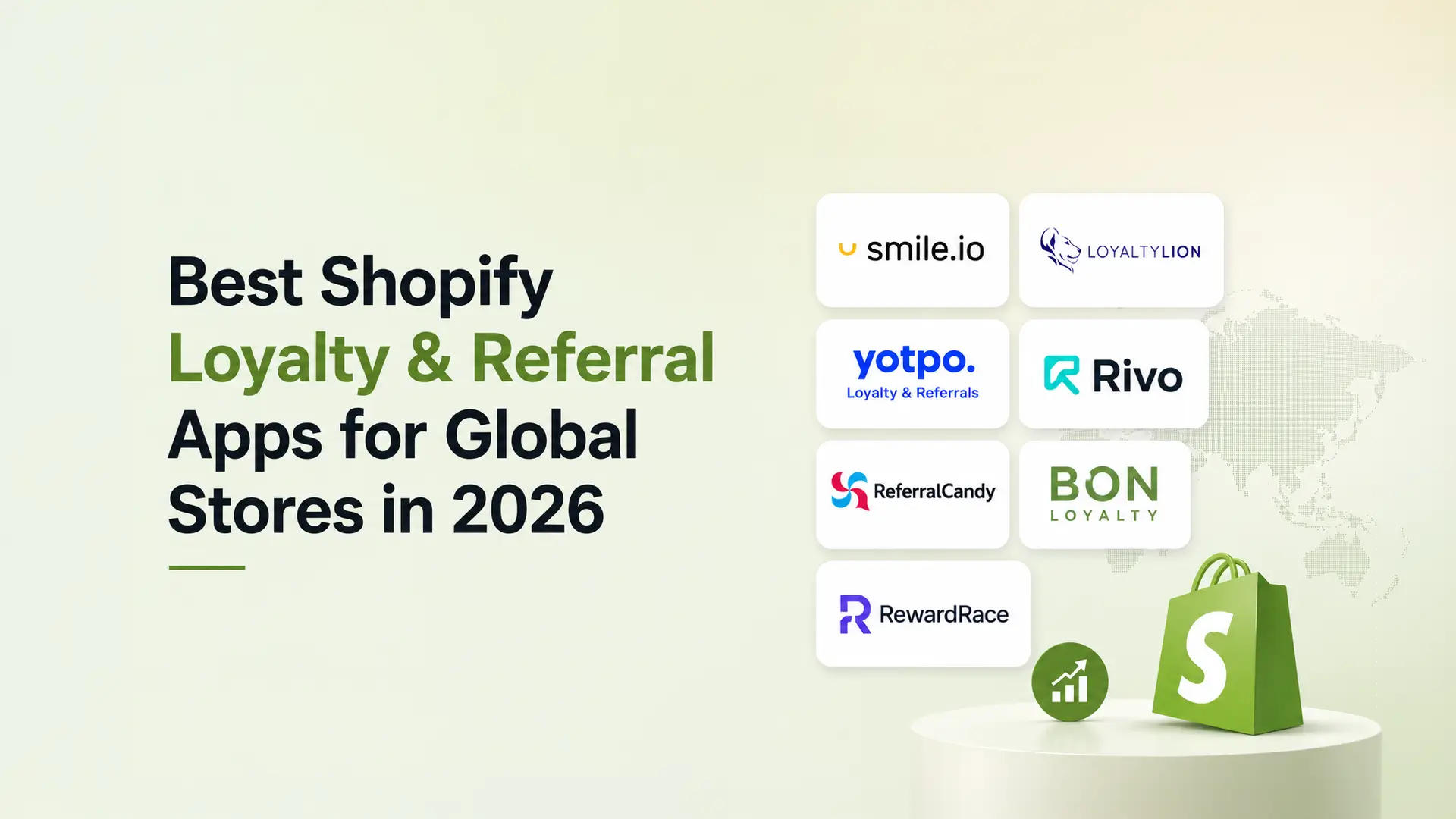
1. Smile.io — the proven, no-code default
Powering well over 100,000 Shopify stores, Smile.io remains the most widely recognised name in this category for a reason. It covers points, referrals, and VIP tiers through a clean, no-code widget, with a free plan and paid tiers starting around $49/month. Best suited for merchants who want a quick, reliable program without engineering involvement. The trade-off is flexibility — heavier customisation and advanced segmentation push you toward higher tiers or a different platform entirely.
Best for: Stores that want a fast, no-code loyalty program with solid brand recognition behind it.
2. LoyaltyLion — the data-driven enterprise pick
LoyaltyLion targets mid-market and enterprise brands with sophisticated segmentation, detailed ROI analytics, and deep integration with email tools like Klaviyo. Pricing starts around $249/month, positioning it well above entry-level tools — appropriately, since it’s built for stores doing $2M or more in annual revenue that need to justify program spend with hard data.
Best for: Data-driven Shopify Plus brands that need enterprise-grade segmentation and retention analytics.
3. Yotpo Loyalty & Referrals — the full retention ecosystem
Yotpo’s advantage is breadth: loyalty, reviews, SMS, and email marketing operate as one connected suite, with data flowing between them without custom integration work. For brands that want one vendor handling the full retention stack rather than stitching together point solutions, this consolidation has real operational value. The trade-off is premium pricing that requires meaningful order volume to justify.
Best for: Established brands that want loyalty, reviews, and messaging unified in a single ecosystem.
4. Rivo — the all-in-one retention platform
Rivo combines referrals, loyalty, customer accounts, and paid memberships in a single platform built exclusively for Shopify and Shopify Plus. It’s known for fast theme-extension loading, strong fraud prevention (over 20 tools including IP monitoring and self-referral blocking), and a developer toolkit for edge cases that out-of-the-box configuration can’t handle. Free for stores under 200 monthly orders, with paid plans starting at $49/month.
Best for: Growing Shopify Plus brands that want referrals and loyalty combined with serious fraud controls.
5. ReferralCandy — the referral specialist
With a 15-year track record and 30,000+ merchants, ReferralCandy stays deliberately focused on referrals rather than bundling in loyalty. That specialisation shows up in deeper referral-specific capabilities — flexible reward structures including cash payouts, A/B testing on referral messaging, and strong automation for high-volume stores. The right fit for brands that already have loyalty or reviews handled elsewhere and want a dedicated referral engine rather than a generalist tool.
Best for: Established brands that want a dedicated, deeply specialised referral engine.
6. BON Loyalty — the budget-conscious global pick
BON balances a usable free tier with genuinely strong multilingual support — over 250 languages and currencies — making it a particularly good fit for stores selling internationally on a tighter budget. Paid plans start around $29/month, among the most accessible in this category for the feature depth offered.
Best for: International stores and budget-conscious operators who still want solid functionality.
7. RewardRace — the merchant-friendly loyalty and referral combo
RewardRace, built by Luminous Labs, takes a straightforward approach to combining points-based loyalty with referral rewards in a single setup, aimed at merchants who want both mechanisms working together without managing two separate apps and reconciling two separate sets of customer data. The focus is on getting a working program live quickly with sensible defaults, while still allowing enough customisation to match brand voice and reward structure. If you’re weighing a packaged app like this against a fully custom build, the trade-offs are similar to the ones in our broader SaaS vs. custom software framework.
Best for: Small to mid-size merchants who want loyalty and referrals running together from day one without juggling multiple tools.
Side-by-Side Snapshot
| App | Primary Focus | Starting Price | Best For |
|---|---|---|---|
| Smile.io | Loyalty + light referrals | Free / ~$49/mo | Fast no-code setup |
| LoyaltyLion | Loyalty + analytics | ~$249/mo | Data-driven enterprise brands |
| Yotpo | Loyalty + full retention suite | Premium | Unified loyalty/reviews/SMS |
| Rivo | Loyalty + referrals + fraud control | Free / ~$49/mo | Shopify Plus growth brands |
| ReferralCandy | Referrals only | Mid-market | Dedicated referral engine |
| BON Loyalty | Loyalty + referrals, multilingual | Free / ~$29/mo | Global, budget-conscious stores |
| RewardRace | Combined loyalty + referrals | Accessible / merchant-friendly | Simple combined setup |
Five Questions to Ask Before You Commit
1. Does pricing scale sensibly with your growth? Some apps charge flat monthly fees, others charge per order or take a percentage of attributed revenue. Model out what the cost looks like at double your current order volume, not just today.
2. Is it built natively for Shopify, or injected as legacy code? Native apps using theme app extensions load faster and conflict less with your theme. This matters more for site speed and conversion than most merchants initially assume.
3. Can rewards be redeemed at checkout, not just on a separate rewards page? Friction between earning and redeeming kills program engagement. Checkout-native redemption consistently outperforms a separate rewards portal.
4. Does the reward structure protect your margin? Build rewards so a referred or redeemed order still clears your target contribution margin — this is a common mistake stores make when they set generous rewards without modelling the actual unit economics.
5. What does the analytics dashboard actually show you? Look past points issued and redeemed — the metrics that matter are revenue uplift from program members versus non-members, and referral conversion rate compared to your other acquisition channels.
Frequently Asked Questions
1. Should I launch loyalty and referrals at the same time?
Most stores see better results launching one program, getting it tuned, then layering in the second. Running both from day one without a clear sense of which is actually driving results makes it hard to attribute revenue correctly, and can dilute your reward budget across two unproven mechanisms.
2. What’s a realistic ROI to expect from a loyalty program?
Industry data shows loyalty programs delivering an average return in the range of 4–5x program cost, with members spending meaningfully more per transaction than non-members. Actual results vary significantly by category, average order value, and how well the program is configured and promoted.
3. Do these apps work for stores that also sell in physical retail locations?
Several of the platforms above support omnichannel loyalty, allowing customers to earn and redeem points across both online and in-store purchases via Shopify POS. If you sell through both channels, confirm POS support explicitly before committing, since not every app in this category handles it equally well.
4. How long does it typically take to set up a loyalty or referral program?
No-code apps with sensible default templates can be live within a day or two. More customised setups — specific tier structures, brand-matched widgets, integration with email marketing — typically take one to three weeks depending on the complexity of the reward logic and how much design customisation you want.
Choosing the Right Shopify Loyalty Apps for Your Store
There is no single “best” app in this category — only the right fit for your current stage, your technical resources, and which growth lever you most need to pull right now. Start by being honest about whether retention or acquisition is your current bottleneck, pick the app that fits your revenue stage rather than the one with the longest feature list, and resist the temptation to over-customise before you’ve validated that customers actually respond to the program at all.
If you’re evaluating RewardRace specifically or want help thinking through which approach fits your store, book a free call and we’ll walk through your specific situation honestly — including telling you if a different app on this list is a better fit for what you need. And if loyalty and referrals are working but your back-office order and inventory systems are the real bottleneck, our case study on fixing fragmented order management covers that adjacent problem.
Luminous Labs builds RewardRace and works with Shopify merchants globally on loyalty, referral, and retention strategy since 2017.